
What's Really Damaging Your Multifamily Roof And Who's Responsible
Managing a multifamily property comes with a long list of
responsibilities, but few are as quietly costly as roof damage. The frustrating
part? Most of it is preventable. Here's what we see repeatedly on these
buildings and what every property owner and manager should know.
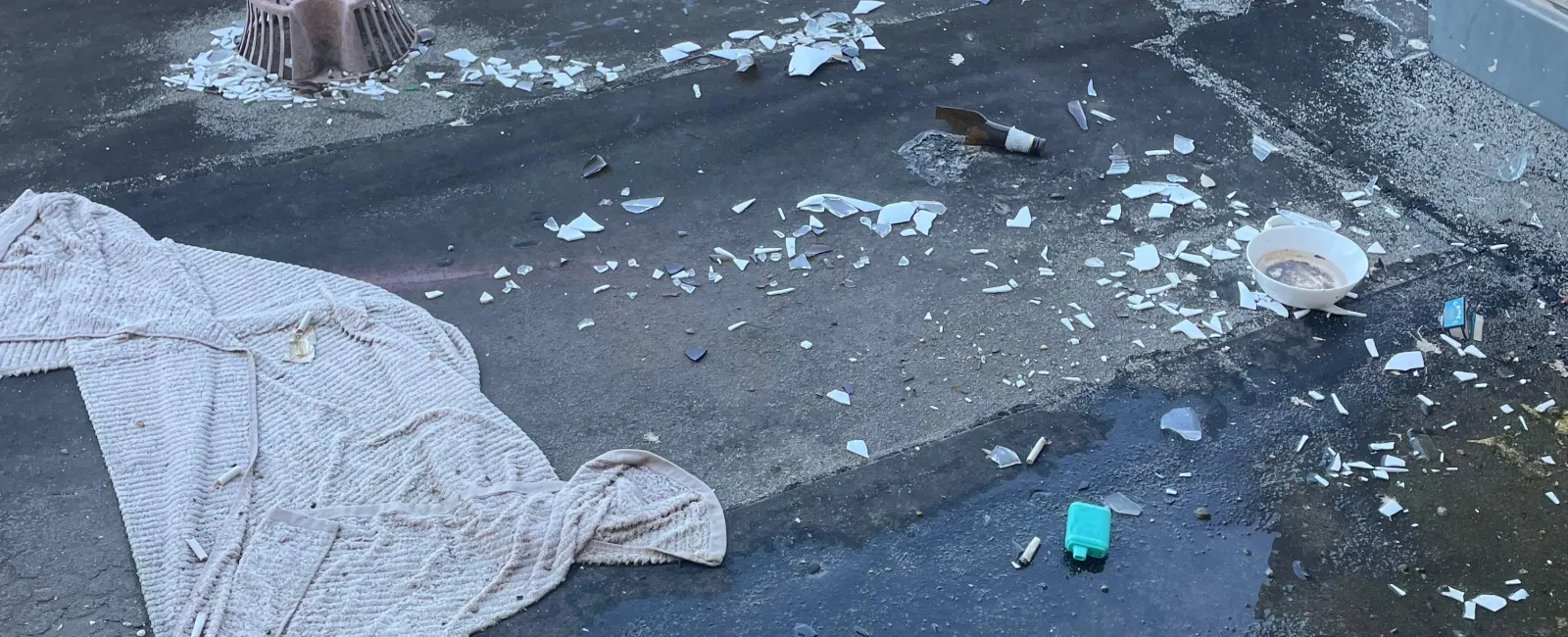
Tenants Are Treating Your Roof Like a Patio
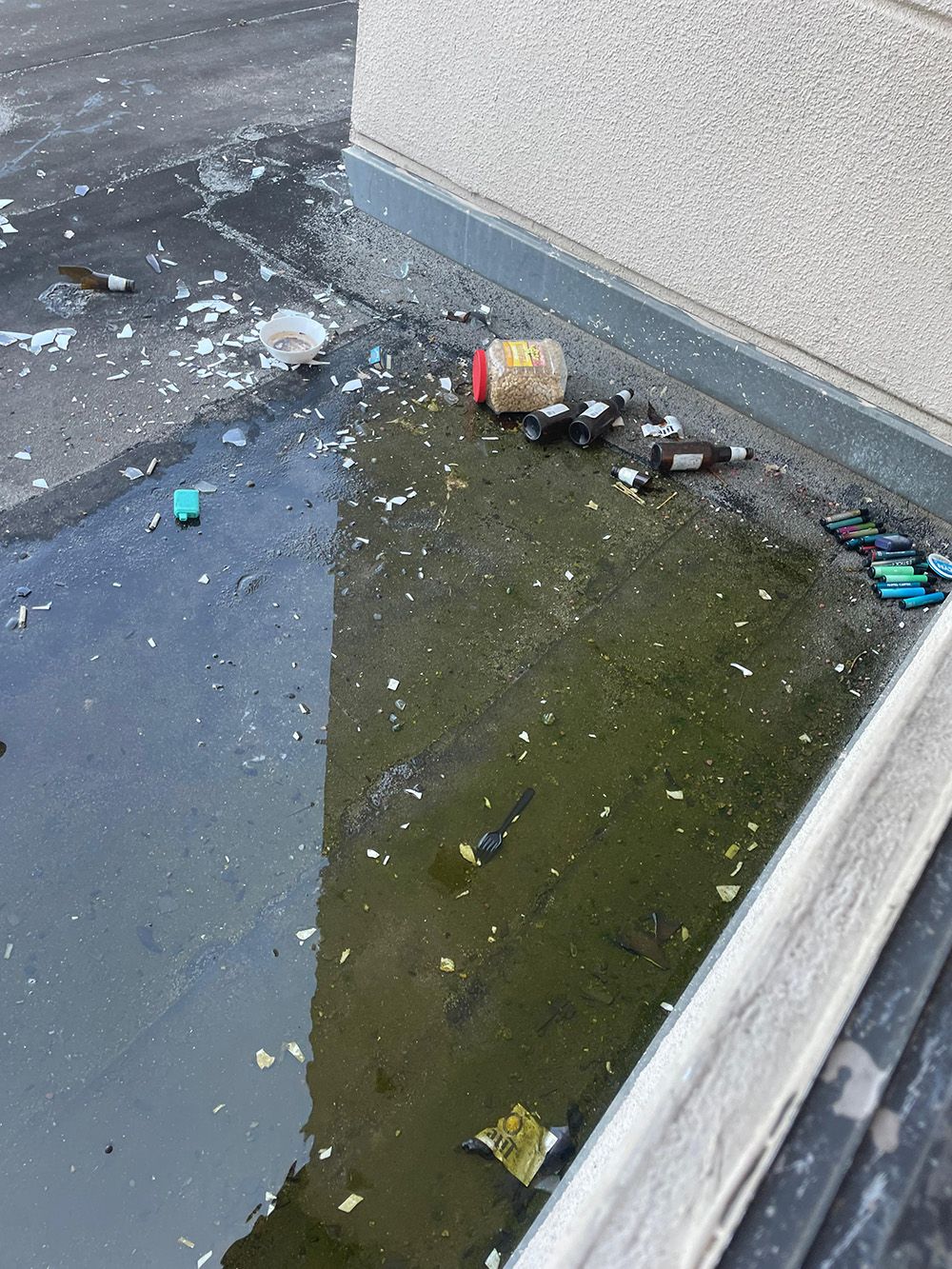
It sounds almost funny until you're staring at a repair bill. When tenants discover roof access through a window, that space quickly becomes an unofficial hangout. Beer cans, glass bottles, chairs, lighters, all of it ends up on the membrane.
On a torch-down roof, debris deteriorates the granules and clogs drains, leading to pooling water and moisture damage. On TPO, a folding metal chair is essentially a blade that will cut right into the membrane. And the plastic grocery bag wrapped around a roof drain acts as a perfect water barrier, builds up debris, and creates a flooding event that could have been avoided entirely.
The rule is simple: a roof is not a patio. Unless it was specifically engineered and designated as one with a proper doorway, tenants should never be up there.
HVAC Contractors Are Up There More Than Anyone, and the Damage Adds Up
Ninety-two percent of roof leaks trace back to flashings, including pipe
boots, termination points, and pitch pans. The rest come from wear, tear, and
punctures, and the trade most often responsible for those punctures is HVAC.
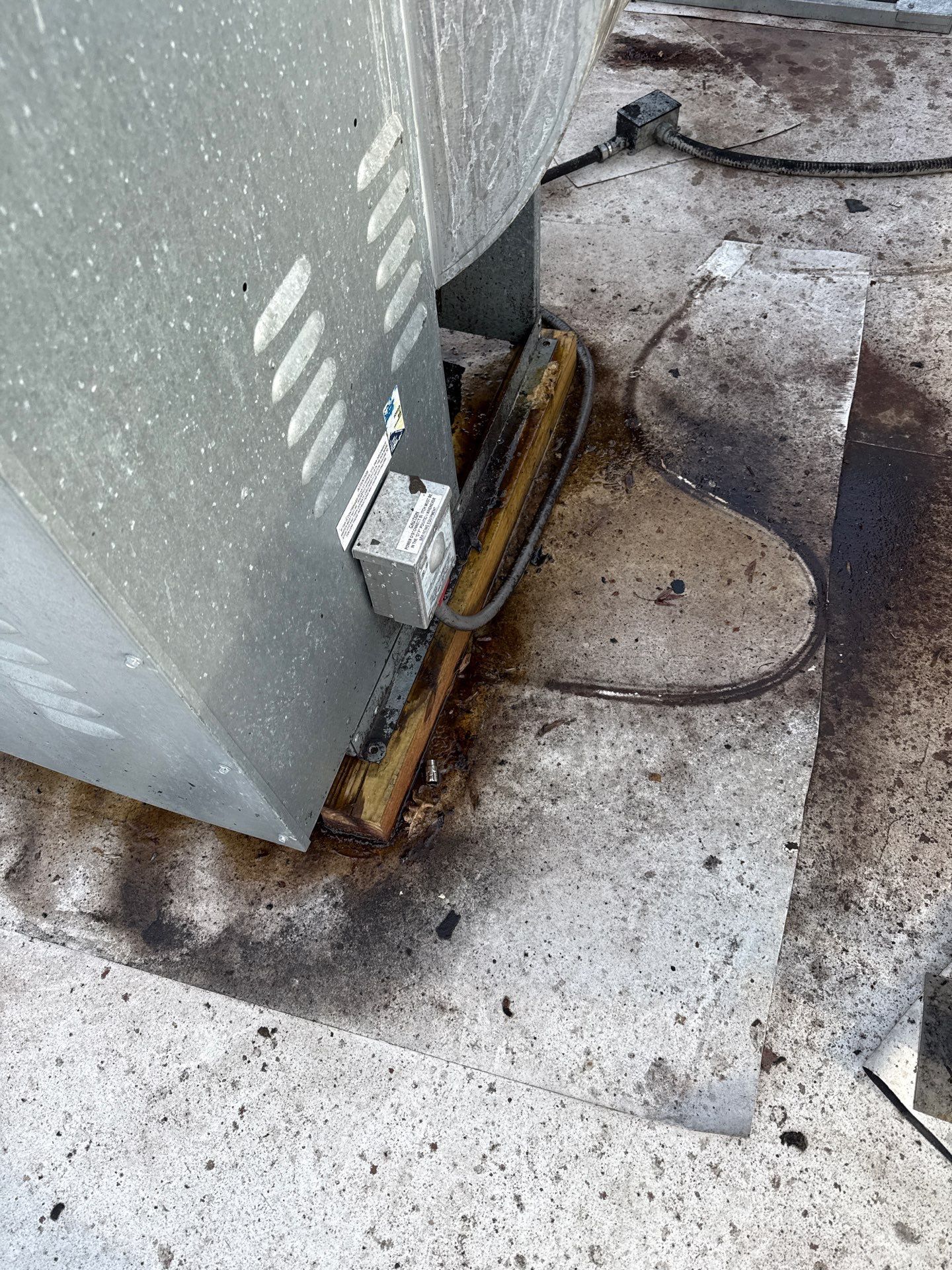
It's not malicious. These guys are working in 110-degree heat, focused on
getting a system running. But HVAC equipment comes with sharp sheet metal
screws, and one dropped fastener that gets stepped on is all it takes. Beyond
screws, an improperly secured AC panel becomes a wrecking ball in a
30-mile-an-hour wind. You can literally follow the trail of punctures as it
tumbles across the roof. Improper sealing after service lets rainwater enter
through the unit's supply and return openings, and the resulting phone call
blames the roof when the AC was the culprit all along. Soldering copper lines
produces molten slag that melts straight through membrane if there's nothing
protecting the surface underneath.
Nine times out of ten, the building owner has no idea any of this
happened. The HVAC guy gets access, does his work, and leaves with nobody
checking behind him.
The fix for owners is straightforward. Require a sign-in log for anyone accessing the roof. Name, company, purpose, time in, time out. Back it up with a wireless security camera aimed at the access door. They're inexpensive and easy to install. One guy signing in and bringing eight workers through a back entrance defeats the log entirely, and the camera closes that gap.
For the trades: stay on the walk pads. Use a magnetic parts bowl so
screws don't get away from you. Never smoke on the roof. If you're soldering, a
welding blanket costs around $40 and eliminates the slag risk completely. Take
before and after photos of your work area. A ten-second walk-around video is
all it takes. And if you accidentally cause damage, say so. Transparency is
always better than a mystery leak two weeks later.
Rooftop Amenities Look Great Until Nobody Maintains What's Underneath
Modern mid-rise buildings are going vertical and reclaiming outdoor space
on the roof. Pools, garden decks, lounge areas. Pedestal deck systems have made
this possible by floating tile surfaces above the membrane on PVC supports,
letting water drain through while keeping foot traffic completely off the roof
itself. Engineered correctly, with high-compression recovery board and fully
adhered membrane, these are impressive systems.
The problem is what happens after installation day: nothing. The roof
underneath those pavers gets completely forgotten. Screws, pins, cigarette
butts and small debris fall through the gaps and sit against the membrane for
years. Drains get ignored. When something finally fails, the bill to crane the
entire deck system down, repair the roof, and reinstall everything runs into
the tens of thousands. We saw a situation in Philadelphia where that number
landed between $80,000 and $100,000 on a project where a $20,000 overburden
warranty would have covered everything.
The lesson: mark your drain locations before the pavers go down, build
annual inspections into your maintenance calendar, and buy the overburden
warranty. What's invisible tends to get ignored, and ignored roofs become
expensive roofs.
Documentation Is the Difference Between a Settled Claim and a Legal
Battle
When damage causes a leak that affects other units or tenants, the
conversation comes down to one thing: documentation. Without a paper trail,
there are no clear answers. With a sign-in log, there's a record of who was
last on the roof and when, and that record protects everyone involved when
questions come up.
Before any vendor touches your roof, require three things. First, a
current Certificate of Insurance. Get it on file and update it quarterly.
Second, a valid contractor's license. Most states require it on every bid and
verification takes thirty seconds online. Third, and most critically,
manufacturer certification for the specific roof system on your building.
That last one surprises a lot of owners. Even if an uncertified
contractor uses the correct materials and follows installation specs exactly,
the manufacturer has the right to suspend the warranty the moment they find
out. Certification isn't just a piece of paper. It means a major manufacturer
has vetted that contractor, confirmed their training, and is willing to put
their name behind the work. Think of it the way you'd think about a Ferrari.
Even a talented independent mechanic can't protect your warranty if they're not
factory-certified. The same standard applies here.
The Bottom Line
Most roof damage on multifamily properties isn't caused by weather. It's
caused by access without accountability: tenants who wander, trades who rush,
and owners who don't have systems in place to track either one. A sign-in log,
a camera, verified credentials, and consistent inspections won't eliminate
every problem, but they will eliminate most of them. And the ones that do slip
through become a lot easier to resolve when there's documentation backing you
up.